

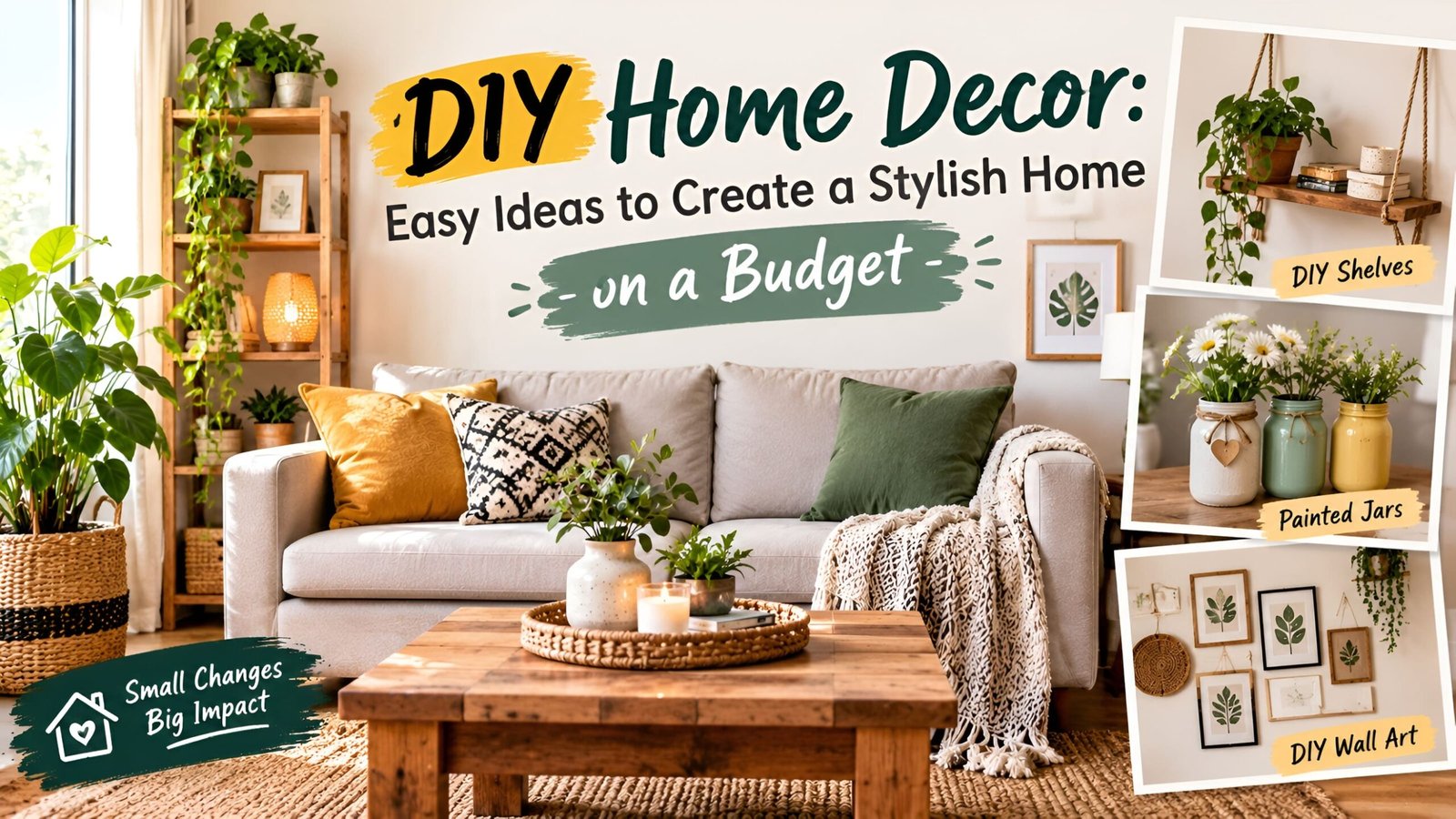
DIY Home Decor is an affordable way to make your home more stylish, comfortable, and personal without spending heavily on new furniture or accessories. Simple projects such as refreshing walls, updating furniture, improving storage, adding textiles, and creating handmade decorations can make a noticeable difference while allowing you to express your own style.
Introduction
A stylish home does not have to come with a high price tag. In many cases, the most effective changes are small, practical, and carefully planned. Instead of replacing everything in a room, you can refresh what you already own, create simple decorations, and make thoughtful changes that improve both appearance and function.
DIY decorating gives you the opportunity to make your home feel more personal. A handmade wall display, refreshed table, organized shelf, or carefully selected textile can add character in a way that mass-produced decorations may not.
The key is to focus on projects that suit your home and your budget. You do not need expensive tools or advanced skills for many beginner-friendly ideas. Start with one room, identify what needs improvement, and choose projects that provide a visible difference without unnecessary spending.
What Is DIY Home Decor?
DIY home decor refers to decorating, creating, updating, or repurposing items yourself rather than purchasing every decorative element ready-made. The projects can be extremely simple or more involved, depending on your skills, available materials, and the type of space you want to improve.
Examples include creating wall art, painting furniture, making decorative storage, updating picture frames, styling shelves, repurposing old objects, and creating handmade accessories.
One of the biggest advantages is flexibility. You can choose colors, materials, patterns, and designs that match your existing furniture and personal preferences. You can also reuse items you already have, helping reduce both waste and decorating costs.
Start With a Simple Decorating Plan
Before buying supplies or starting a project, decide what you want to achieve. Randomly adding decorations can make a room feel crowded rather than stylish.
Begin by looking at the room as a whole. Consider its furniture, walls, lighting, storage, colors, and available space. Ask yourself what is actually missing. Perhaps the room needs better organization, more warmth, additional color, or a stronger focal point.
Set a realistic budget as well. Write down the materials you genuinely need and avoid purchasing unnecessary accessories simply because they look attractive in a store.
A simple plan also helps you create a consistent style. When each project supports the same overall design direction, the finished room will look more intentional.
Refresh Your Walls With Affordable Ideas
Walls offer one of the easiest opportunities for a noticeable transformation. You do not necessarily need expensive artwork or a complete renovation to make an empty wall more interesting.
A gallery wall can combine photographs, inexpensive prints, illustrations, or handmade artwork. Frames in similar finishes can create a coordinated appearance, while a mixture of sizes can make the arrangement more relaxed.
Another option is to create a simple accent area with paint, removable wallpaper, fabric, or lightweight decorations. If you are renting, removable options may provide flexibility without making permanent changes.
Remember that empty space is also part of the design. Covering every part of a wall can make a room feel busy. A carefully arranged display with enough breathing room often looks more sophisticated.
Give Old Furniture a Fresh Appearance
Buying new furniture can quickly increase the cost of decorating. Before replacing an old table, cabinet, chair, or bedside table, consider whether it can be refreshed.
Cleaning, repairing, repainting, or changing hardware can give an existing piece a completely different appearance. New handles or knobs, for example, can create a subtle update without changing the entire item.
Choose finishes that work with the room’s existing colors and materials. If you are painting or refinishing furniture, follow the manufacturer’s instructions for preparation, ventilation, drying, and safe use of the products.
You also do not have to update every piece. Refreshing one noticeable item can sometimes have a greater effect than changing several smaller objects.
Create Decorative Storage
Good storage can improve both the appearance and functionality of a room. Instead of hiding everything behind closed doors, you can turn practical storage into part of the decoration.
Baskets, boxes, trays, jars, and containers can organize everyday belongings while adding texture and visual interest. Matching or coordinated containers can make open shelving look cleaner.
Repurposing is another affordable option. An unused container may become a holder for stationery, craft supplies, accessories, or other small items. With a little creativity, objects that would otherwise sit unused can become useful parts of the room.
Keeping clutter under control is one of the simplest ways to make a home appear more polished.
Improve the Look of Your Lighting
Lighting can dramatically influence the atmosphere of a room. A space with only one overhead light may feel very different from one that combines several suitable light sources.
Consider adding table lamps, floor lamps, or other safe decorative lighting options where appropriate. Changing a lampshade can also update an existing lamp without replacing the entire fixture.
If you are interested in DIY lighting, keep safety as the priority. Electrical wiring and permanent electrical modifications should be handled by a suitably qualified professional rather than treated as a beginner decorating project.
The goal is to create comfortable layers of light while making sure every fixture and component is appropriate for its intended use.
Add Texture With Textiles
Textiles can make a room feel warmer without requiring major changes. Cushions, throws, curtains, rugs, and fabric accessories introduce softness, color, and texture.
You can create a more coordinated look by repeating one or two colors across different textiles. For example, a color appearing in a cushion can be subtly repeated in artwork or a small decorative accessory.
Old fabric can sometimes be repurposed into simple decorative items, depending on its condition and suitability. Small sewing or no-sew projects can turn leftover material into covers, organizers, or other useful accents.
The important thing is balance. Too many different patterns can make a room look visually complicated, while a small number of complementary textures can create a more comfortable atmosphere.
Bring Natural Elements Into Your Home
Natural elements can add freshness and warmth to an interior. Plants, wood textures, woven materials, and other natural-looking details can work across many decorating styles.
A small plant on a shelf, desk, windowsill, or side table can provide a simple focal point. Decorative planters can also be customized to complement the colors already present in your room.
If live plants are not practical, dried natural materials or suitable artificial alternatives can provide decorative interest with less maintenance.
Natural textures are especially useful when you want a room to feel relaxed rather than overly formal.
Explore Boho-Inspired Decorating
If you enjoy relaxed spaces with natural textures, layered textiles, handmade details, and creative accessories, Boho Decor can provide useful inspiration.
Boho-inspired rooms often combine different textures and materials rather than relying on a perfectly matched furniture set. Woven baskets, soft textiles, plants, natural materials, artwork, and handmade accessories can work together to create a comfortable atmosphere.
You do not need to completely redesign a room to introduce this style. A few carefully selected elements can provide the feeling without overwhelming the existing design.
The best approach is to choose pieces that complement your current space rather than adding every possible bohemian accessory at once.
Make Your Bedroom More Personal
The bedroom is one of the best places to use simple decorating projects because small changes can influence the overall feeling of the space.
You could update the wall behind the bed, organize your bedside area, refresh cushions and throws, create a simple photo display, or repurpose furniture for additional storage.
When planning Bedroom Decor, focus on both comfort and practicality. Decorative pieces should support the way you actually use the room instead of creating unnecessary clutter.
A calm color palette, organized surfaces, comfortable textiles, and a few personal details can create a bedroom that feels more intentional without requiring an expensive makeover.
Create a DIY Focal Point
A focal point is an area that naturally attracts attention when someone enters a room. It could be artwork, a decorated wall, a distinctive piece of furniture, a mirror, or a carefully styled shelf.
Creating one yourself can be surprisingly simple. For example, several related prints can become a gallery arrangement, while an old piece of furniture can become a statement item after a suitable refresh.
Try not to create too many focal points in one room. When everything demands attention, nothing stands out clearly.
Choose one main area and keep surrounding elements relatively simple. This creates a stronger visual hierarchy and helps the room feel organized.
Repurpose Before You Buy
One of the most effective ways to reduce decorating costs is to use what you already own.
Walk through your home and look for objects that could be moved, repaired, repainted, reorganized, or used differently. A lamp from one room might work better in another, while an unused frame could become part of a gallery wall.
Repurposing also makes a home more distinctive. Instead of filling your rooms with identical store-bought accessories, you can create arrangements that reflect your own creativity and history.
Before purchasing anything new, ask whether something you already own could perform the same job.
Choose a Simple Color Scheme
Color is one of the strongest elements in interior design, but you do not need a complicated palette to create an attractive room.
A simple approach is to choose one dominant color, one supporting shade, and one accent color. These colors can appear across walls, textiles, artwork, furniture details, and accessories.
If you prefer flexibility, keep larger pieces relatively neutral and introduce stronger colors through smaller items. This makes future updates easier because accessories can be changed without redesigning the entire room.
Also consider natural light. Colors can appear different throughout the day depending on sunlight and artificial lighting, so always consider the room’s actual conditions before committing to a major change.
Make Shelves Look More Stylish
Open shelves can easily become cluttered, but they can also become an attractive part of a room when styled carefully.
Start by removing unnecessary items. Then group objects by size, material, or color. Books, small plants, photographs, baskets, and decorative objects can be arranged together while leaving some empty space.
Varying heights can make a shelf more interesting. A tall object beside smaller pieces can create visual balance, while repeated materials can make the arrangement feel connected.
Do not feel the need to fill every shelf completely. Empty areas can make the objects you choose appear more intentional.
Create Affordable Wall Art
You do not need expensive artwork to make your walls interesting. Simple handmade pieces can provide color and personality while keeping costs low.
You could create abstract designs, frame photographs, arrange printed illustrations, or use fabric as a decorative wall element. The finished piece should complement the room rather than compete with everything else.
If you are creating several pieces, use a common color or theme to connect them. This can make inexpensive artwork look like part of a planned collection.
The most important factor is choosing something you genuinely like. Your home should reflect your personality rather than simply copying a temporary trend.
Use Mirrors to Enhance a Room
Mirrors can be both decorative and practical. They can reflect light and create a sense of additional visual space when positioned thoughtfully.
An existing mirror can sometimes be updated with a new frame or surrounding decorative arrangement. Even a simple frame change can make an older mirror feel more appropriate for a newly decorated room.
Placement matters. A mirror facing a pleasant view, window, or attractive part of the room can make that feature more noticeable.
Avoid placing mirrors without considering what they will reflect. A mirror can emphasize clutter just as easily as it can highlight a beautiful part of the room.
How to Make DIY Decor Look Expensive
A polished appearance is usually more about consistency than cost. Even inexpensive materials can look attractive when they are thoughtfully selected and arranged.
Pay attention to spacing, proportions, color, and finishing details. Keep surfaces organized and avoid putting too many unrelated objects together.
A limited palette can also make affordable pieces appear more coordinated. Repeating similar materials, colors, or shapes throughout a room creates visual connection.
Another useful principle is quality over quantity. Instead of buying ten small decorations, consider creating or choosing two or three pieces that have a stronger visual impact.
Budget-Friendly Decorating Priorities
When money is limited, prioritize changes that provide the biggest improvement for the least expense.
Refreshing existing furniture, reorganizing storage, creating wall art, changing textiles, and rearranging furniture can often make a room look different without requiring a large budget.
It is also worth completing one project at a time. Buying supplies for several projects simultaneously can lead to unnecessary spending and unfinished work.
A realistic decorating budget should include materials, tools, and any replacement items you genuinely need. Planning ahead makes it easier to stay within your limits.
Common DIY Decorating Mistakes
One common mistake is starting too many projects at once. Several unfinished projects can make a home feel more chaotic rather than more attractive.
Another mistake is following trends without considering whether they fit your existing furniture and lifestyle. A decorating idea may look excellent in a photograph but may not work well in your particular room.
Ignoring function is another problem. Storage should remain accessible, furniture should remain comfortable, and decorative objects should not block normal movement around the room.
Preparation is also important. Measure carefully, understand the material you are working with, and follow product instructions before beginning a project.
Keep Safety in Mind
DIY decorating should be enjoyable, but safety should always come first. Use tools and materials according to their instructions and protect the surfaces and surrounding areas when necessary.
Projects involving electricity, major structural changes, heavy installations, or unfamiliar tools may require professional assistance. Do not take unnecessary risks simply to complete a project yourself.
For younger or inexperienced DIYers, an adult or experienced person should supervise projects involving tools, chemicals, ladders, or other potential hazards.
A successful decorating project is one that improves your home without creating avoidable safety problems.
How to Build Your Home Style Over Time
You do not need to complete a full home makeover immediately. Decorating gradually can be more affordable and often produces a more natural result.
Start with the room you use most and identify the changes that matter most. Complete a few projects, live with the result, and then decide what the space still needs.
Over time, you will begin to recognize the colors, textures, furniture styles, and decorative details that work best for your home.
This gradual approach also prevents unnecessary spending because you have more time to decide whether a purchase or project is genuinely useful.
Final Thoughts
Creating a stylish home on a budget is possible when you focus on creativity, planning, and practical improvements rather than expensive purchases. You can refresh existing furniture, create simple wall art, improve storage, introduce textiles, add natural elements, and repurpose objects you already own.
The best DIY Home Decor projects are not necessarily complicated. They are the ones that make your space more functional, comfortable, and personal while staying within your budget.
Start small and focus on one area at a time. Whether you are updating a bedroom, refreshing a living room, or experimenting with a relaxed boho-inspired look, thoughtful DIY projects can gradually transform your home into a space that feels genuinely yours.
Frequently Asked Questions
What is the easiest DIY home decor project for beginners?
Creating simple wall art, updating picture frames, reorganizing shelves, refreshing small accessories, or rearranging existing furniture are good beginner projects because they require relatively few materials and little experience.
How can I decorate my home on a small budget?
Start with items you already own. Rearrange furniture, repurpose containers, refresh existing pieces, create simple artwork, and change textiles before buying new decorations. Prioritize projects that create a noticeable improvement.
How do I make DIY decor look stylish?
Use a consistent color palette, leave enough empty space, avoid overcrowding, and focus on a few well-chosen elements. Consistent colors and textures can make inexpensive projects look more coordinated.
Can DIY decor work in a small home?
Yes. Small homes can benefit from vertical storage, multifunctional furniture, wall decorations, mirrors, and compact accessories. Keeping surfaces organized is particularly important in limited spaces.
Is DIY home decor suitable for renters?
Many projects can work well for renters, including portable decorations, furniture updates, textiles, freestanding storage, and removable wall solutions. Always check your rental agreement before making permanent changes.
How do I choose the right DIY project?
Consider your budget, available time, skill level, materials, and the actual needs of the room. Choose projects that improve both appearance and function rather than simply adding more objects.
What should I do before starting a DIY decorating project?
Create a simple plan, measure the space if necessary, gather the correct materials, set a budget, and understand the project’s safety requirements. For electrical or major structural work, use a qualified professional.