

Introduction
Most people spend close to a third of their life in the bedroom, yet it’s often the last room to get real design attention. Living rooms get the statement sofa, kitchens get the renovation budget, and the bedroom gets whatever furniture was left over from the last move. That’s a missed opportunity — a well-decorated bedroom doesn’t just look good, it affects how well you sleep, how calm you feel at night, and how ready you feel each morning. This guide walks through the decisions that actually shape a bedroom’s look and feel, from layout and color to lighting, storage, and the small personal touches that make a room feel finished rather than furnished.
What Are the Best Bedroom Decor Ideas?
The best bedroom decor combines a deliberate color palette, layered lighting, comfortable and texturally varied bedding, a properly sized rug, curtains hung close to ceiling height, and enough personal detail to make the room feel lived-in rather than staged. Small, well-chosen changes — swapping bedding, adding a second light source, decluttering surfaces — usually move the needle more than a full furniture overhaul.
Bedroom Decor at a Glance
| Element | What It Does | Quick Guideline |
| Color palette | Sets the room’s mood | 1 dominant neutral + 1 secondary + 1 accent |
| Lighting | Shapes atmosphere and function | At least 3 sources, warm-toned bulbs |
| Bedding | Adds comfort and visual weight | Layered textures, not matching sets |
| Rug | Adds warmth, defines the space | Extends 18–24 in. beyond bed edges |
| Curtains | Frames light and finishes the room | Hung near ceiling height, floor-length |
| Wall art | Adds personality | Sized to ~⅔ the width of furniture below |
| Storage | Keeps the room functional | At least one dual-purpose piece |
Decor Styles to Choose From
Picking a general style first makes every other decision — color, furniture, accessories — much easier.
Modern leans on clean lines, a restrained color palette, and uncluttered surfaces, with one or two contrasting elements to keep it from feeling sterile.
Minimalist goes further, keeping only what’s genuinely used or loved — open surfaces, simple furniture, a tight color range.
Cozy/Traditional-Comfort prioritizes softness: layered blankets, warm lighting, natural materials, and a gentler color story.
Boho mixes textures, patterns, and natural materials freely, with plants and woven pieces doing a lot of the visual work.
You don’t need to commit fully to one — most well-decorated bedrooms borrow from two or three.
Main Bedroom Decor Ideas
Build the Bed as the Focal Point
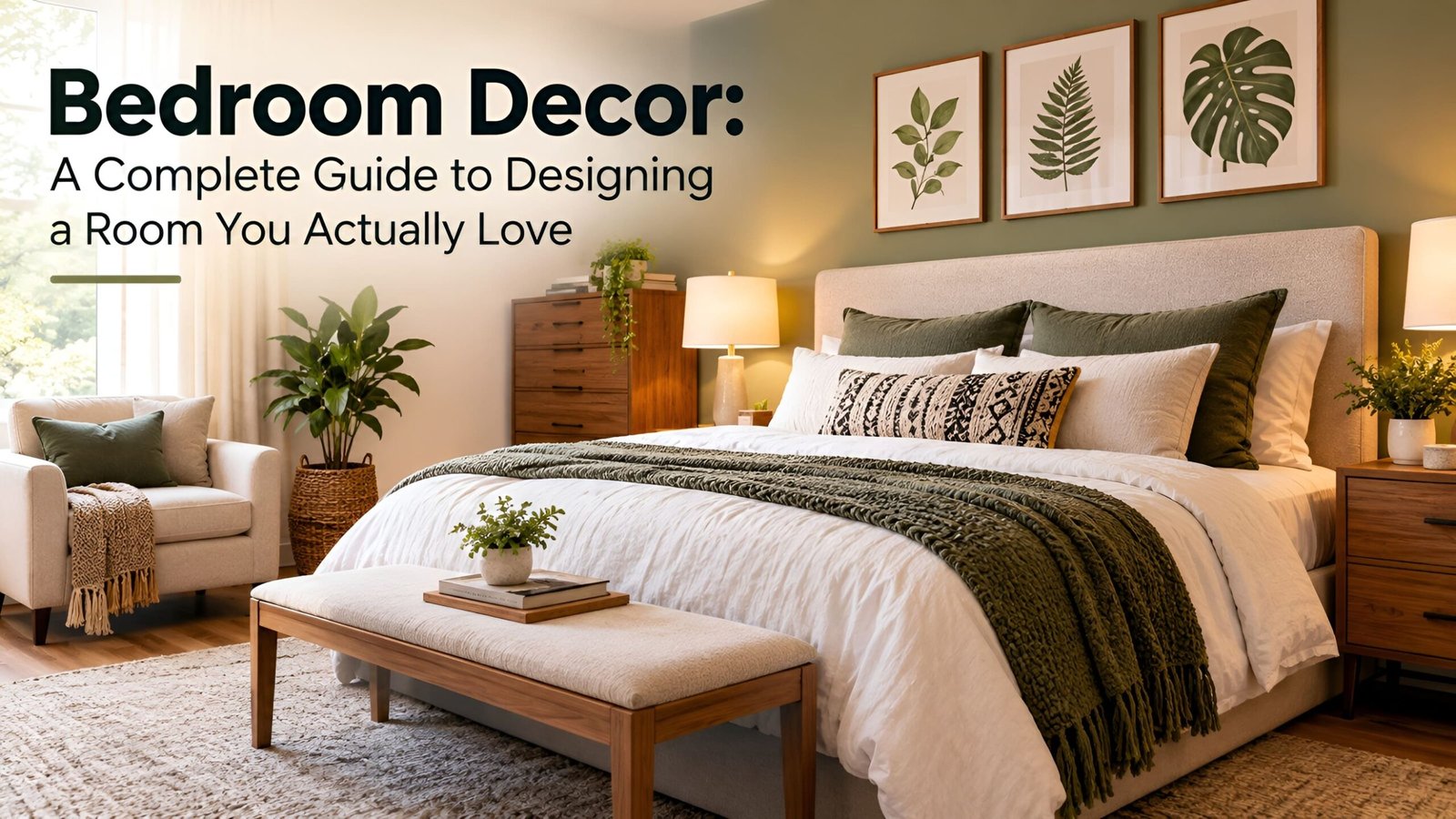
The bed carries most of a bedroom’s visual weight. Layer a fitted sheet, a duvet in one tone, a folded throw in a different texture, and two to three cushions of varying sizes — this reads as curated far more than a matching duvet-and-cushion set straight out of the packaging. An upholstered or wood headboard gives the eye a stopping point and anchors the whole arrangement.
Layer Lighting Deliberately
A single ceiling fixture rarely makes a bedroom feel comfortable at night. Combine ambient light (a dimmable overhead fixture), task light (bedside lamps at shoulder height for reading), and accent light (a floor lamp or LED strip behind the headboard). Warmer bulbs, around 2700K–3000K, suit bedrooms better than cool daylight tones.
Treat Walls as an Opportunity, Not an Afterthought
Bare walls make even well-furnished bedrooms feel incomplete. One piece of art sized to roughly two-thirds the width of the furniture below it usually has more impact than several small, scattered pieces.
Size the Rug Correctly
A rug should extend at least 18–24 inches beyond the sides of the bed so it stays visible when you step out of bed, rather than disappearing entirely underneath.
Hang Curtains Higher Than You Think
Mounting curtains close to ceiling height — not just above the window frame — makes ceilings look taller and windows look larger. Lighter fabrics like linen keep a room feeling airy; blackout curtains are worth prioritizing for rooms with early morning light.
Use Mirrors With a Purpose
Place a mirror to reflect a window or light source rather than just to fill empty wall space — it does double duty as decor and as a way to bounce light around the room.
Best Bedroom Colors for a Comfortable Atmosphere
A reliable approach: one dominant neutral for walls and large furniture, one secondary color for bedding and textiles, and one accent used sparingly.
- Neutrals (warm white, oatmeal, greige) are the easiest to live with long-term and simplest to update seasonally.
- Earthy tones (terracotta, olive, walnut) pair naturally with wood furniture and feel warm under evening light.
- Muted blues and sage greens work best in rooms with strong natural light — they can look flat in dim, north-facing rooms.
Three colors used unevenly almost always look more intentional than five used equally.
Small Bedroom Decor Ideas
Small rooms respond better to targeted changes than a full redesign:
- Choose furniture with a second function — a storage ottoman, a bed frame with drawers, a nightstand that doubles as a desk.
- Prioritize vertical storage (wall shelves, tall narrow wardrobes) over wide dressers that eat floor space.
- Keep walls and large furniture in one consistent color to avoid visual breaks that make the room feel choppy.
- Place a mirror opposite the window to bounce natural light back into the room.
Bedroom Decor Ideas on a Budget
A full makeover isn’t necessary to noticeably improve a bedroom:
- Rearrange existing furniture before buying anything new — layout changes are free.
- Swap bedding and add one new textured cushion or throw for an instant refresh.
- Add a second light source, even a simple plug-in lamp, before considering an electrician.
- Declutter surfaces — removing items often improves a room’s feel more than adding them.
- Reuse furniture in a new spot or paired with different accessories instead of replacing it.
Combining Boho Decor With DIY Home Decor
Boho decor is one of the easiest styles to build through DIY home decor rather than buying everything new. Because the look thrives on mixed textures, imperfect layering, and natural materials, handmade or upcycled pieces actually suit it better than polished, store-bought sets. A hand-tied macramé wall hanging, a thrifted rattan mirror repainted in a warm tone, or cushion covers sewn from leftover patterned fabric can all fit naturally into a boho bedroom without looking out of place. Pairing a few DIY pieces with one or two intentionally bought statement items — a woven rug or a rattan headboard, for example — keeps the room from feeling either too staged or too scattered, while giving the space a personal, handmade character that store-bought boho kits rarely achieve.
Common Bedroom Decor Mistakes to Avoid
- Using too many unrelated colors instead of one clear palette
- Filling every surface with accessories, leaving no visual breathing room
- Relying on a single ceiling light for all lighting needs
- Buying furniture too large for the room’s actual footprint
- Prioritizing appearance over comfort — for example, decorative pillows that never leave the bed
- Mixing multiple patterns with no connecting color or texture
Making the Bedroom Feel Comfortable, Not Just Styled
Comfort should take priority over pure appearance. Start with what you physically interact with most: the mattress and bedding, room temperature, and lighting you actually use at night. These affect daily experience more than any decorative accessory. Keep items you use often — water glass, phone charger, book — within easy reach of the bed, and resist the urge to add décor that doesn’t improve comfort or function. A consistent palette and a manageable number of decorative pieces will do more for the room’s feel than a constant stream of new additions.
Bedroom Decor by Room Size
Small bedroom — multifunctional furniture, vertical storage, a simple two-to-three color palette, and clear walking space.
Medium bedroom — room for a small seating area, a larger rug, extra storage, or a more developed wall-art arrangement while still keeping the layout comfortable.
Large bedroom — avoid pushing all furniture against the walls, which can leave the center feeling empty. Create distinct zones with rugs, a reading chair, or a bench, so unused space gets a clear purpose.
How to Create a Cohesive Bedroom Look
Cohesion doesn’t mean everything matches — it means different pieces share a visual thread through color, material, or texture. Repeat one or two materials (wood, linen, woven fiber) across furniture, textiles, and accessories so unrelated pieces still feel connected. Stick to the same small color set across bedding, curtains, rug, and artwork. And leave open space between decorative elements — a room with breathing room lets the pieces you’ve chosen actually stand out, instead of competing for attention.
Frequently Asked Questions
How do I make my small bedroom look bigger without renovating?
Use a mirror placed opposite the window, keep wall and furniture colors consistent, choose furniture that serves two purposes, and keep walking paths clear of clutter.
What’s the ideal bedside lamp height for reading?
The bottom of the lampshade should sit roughly at shoulder height when you’re sitting up in bed — low enough to avoid glare, high enough to properly light a book or phone.
How many colors should a bedroom palette have?
Three works best in most rooms: one dominant neutral, one secondary color for textiles, and one accent used sparingly in art or small accessories.
Do curtains need to be floor-length?
Not strictly, but floor-length curtains hung near ceiling height make windows and ceilings look larger, which is especially useful in smaller or lower-ceilinged rooms.
What’s the single highest-impact, lowest-cost bedroom update?
Decluttering surfaces and adding a second light source (like a bedside lamp) typically change how a room feels more than any single decorative purchase.
Conclusion
Good bedroom decor isn’t about chasing a trend or buying a matching furniture set. It comes down to a handful of deliberate choices — a color palette with a clear structure, lighting layered for both morning and night, textiles chosen for contrast rather than uniformity, and just enough personal detail to make the room feel like yours. Start with the bed and the lighting, since those shape daily comfort the most, then build outward from there — rug, curtains, walls, storage — one intentional decision at a time.