
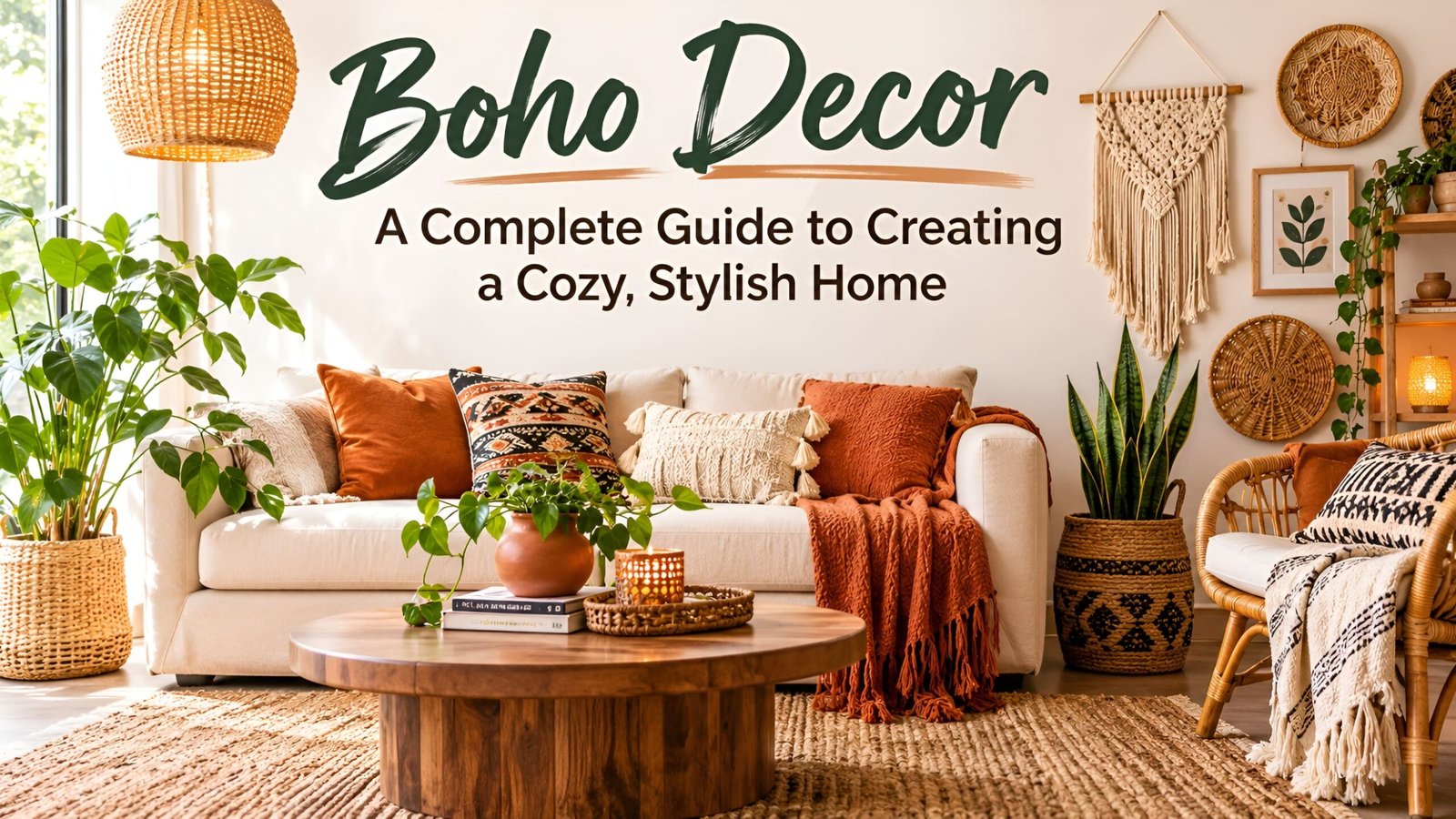
Boho decor is a relaxed interior style that combines natural materials, warm colors, layered textures, plants, artwork, and personal accessories. To create the look, start with a comfortable foundation and gradually add woven pieces, wood, textiles, greenery, and meaningful decorations. The goal is a warm, inviting home that feels personal rather than perfectly matched.
Creating a home that feels comfortable and personal does not require every piece of furniture to match. Boho Decor offers a flexible approach that allows you to combine natural materials, soft textiles, earthy colors, plants, artwork, and accessories that reflect your personality. Instead of following rigid design rules, the style focuses on creating a relaxed atmosphere with plenty of character.
The beauty of this approach is that it can work in almost any home. You can introduce a few bohemian touches into a modern apartment or use the style throughout your living room, bedroom, dining area, and other spaces. The key is finding the right balance between color, texture, pattern, comfort, and open space.
What Is Boho Decor?
Boho decor, short for bohemian decor, is an interior design style associated with creativity, individuality, natural elements, and relaxed living. It often combines materials and decorative pieces that would not necessarily belong to one traditional furniture collection.
A bohemian-inspired room might include a wooden coffee table, a woven rug, cotton cushions, rattan furniture, indoor plants, handmade pottery, artwork, and warm lighting. These elements can have different designs while still working together through repeated colors, textures, or materials.
Unlike highly structured interior styles, bohemian design leaves room for experimentation. You can make it colorful and expressive or keep it soft and neutral. What matters most is that the finished room feels welcoming and reflects the people who live there.
Why Is Boho Style So Popular?
One reason this style continues to attract homeowners is its flexibility. You do not need to replace an entire room to create the look. A few changes to textiles, lighting, plants, and accessories can make an existing space feel noticeably different.
Comfort is another important factor. Soft cushions, textured throws, rugs, curtains, and natural materials can make rooms feel more inviting. Instead of focusing only on how a room looks in photographs, the style encourages you to think about how it feels when you actually use it.
Bohemian interiors can also work well with sustainable decorating choices. Secondhand furniture, handmade objects, natural fibers, and repurposed pieces can all become part of the design.
Most importantly, there is no single formula. Two homes can use the same basic principles while looking completely different.
Key Elements of Boho Decor
Although bohemian rooms vary considerably, several design elements appear again and again. Understanding these elements makes it easier to build the look without making the room feel random.
Natural Materials
Natural materials bring warmth and visual interest to an interior. Wood, rattan, wicker, bamboo, jute, cotton, linen, and clay are particularly useful choices.
A wooden table can provide a warm foundation, while a woven basket can add texture and practical storage. A jute rug can introduce another natural surface underfoot.
You do not need to use every natural material in one room. Choosing a few and repeating them in different areas can create a more cohesive appearance.
Layered Textures
Texture is one of the easiest ways to make a room feel comfortable. Instead of relying on color alone, combine materials that look and feel different.
For example, a cotton sofa can be paired with knitted throws, linen curtains, woven cushions, a textured rug, and wooden furniture. The combination creates depth without requiring a complicated color scheme.
Layering should still be intentional. Too many competing textures can make a room feel visually crowded, so allow simpler surfaces to balance heavily textured pieces.
Earthy and Warm Colors
Earth-inspired colors are often associated with bohemian interiors. Beige, cream, terracotta, brown, olive green, rust, warm white, and muted yellow can provide a natural foundation.
If you enjoy stronger colors, introduce them through cushions, rugs, artwork, curtains, or decorative accessories. Keeping larger furniture pieces relatively neutral makes it easier to change accent colors later.
A simple palette also helps different patterns and materials work together.
Plants and Greenery
Plants can add life, color, and organic shapes to a room. Large plants can fill an empty corner, while smaller varieties can sit on shelves, side tables, or window areas.
Hanging planters can also add visual interest at different heights. If you have limited natural light, choose plants that are suitable for the conditions rather than selecting them solely for appearance.
For households where live plants are difficult to maintain, high-quality artificial greenery can provide a similar decorative effect.
Handmade and Personal Pieces
Personal objects can make a bohemian interior feel authentic. Handmade pottery, woven baskets, photographs, artwork, books, souvenirs, and family items can all contribute to the atmosphere.
The goal is not to display everything you own. Choose pieces that you genuinely enjoy and arrange them thoughtfully.
This approach creates a home with personality rather than a room that looks like it was purchased as one matching set.
How to Create a Boho Living Room
The living room is one of the easiest places to introduce a relaxed bohemian atmosphere because it naturally provides opportunities for soft furnishings, rugs, plants, artwork, and decorative accessories.
Begin with comfortable seating in a neutral or natural shade. Add cushions and throws in different textures rather than choosing identical pieces.
A textured area rug can help define the seating area while adding warmth. Wooden or rattan furniture can reinforce the natural character of the room, while baskets can provide useful storage.
For the walls, consider artwork, woven decorations, photographs, mirrors, or a small gallery arrangement. Avoid covering every wall because some empty space helps the room feel balanced.
Finish the room with several light sources, such as a floor lamp and table lamp, so the atmosphere can change throughout the day.
How to Create a Boho Bedroom
A bedroom should feel calm and comfortable while still showing personality. This makes thoughtful Bedroom Decor particularly important when creating a bohemian-inspired sleeping space.
Start with simple bedding in cream, beige, white, or another soft neutral shade. Add interest with textured cushions, a woven blanket, or a patterned throw.
Wooden bedside tables, rattan storage, woven lampshades, and suitable indoor plants can reinforce the natural atmosphere. You can also introduce artwork or photographs above the bed or on another suitable wall.
Lighting plays an especially important role in the bedroom. Soft lamps and warm ambient lighting can create a more relaxing environment than relying entirely on a bright overhead fixture.
Keep bedside surfaces reasonably clear so the room remains practical. A few carefully selected accessories will usually have more impact than a large collection of unrelated decorations.
Boho Decor for Small Spaces
A small room can still have plenty of personality. The main challenge is avoiding too many large or unnecessary objects.
Choose furniture according to the actual size of the room and use decorative pieces that provide more than one benefit where possible. A woven basket, for example, can provide storage while also adding texture.
Wall shelves can display plants, books, photographs, and small accessories without taking up valuable floor space.
Mirrors can also help reflect available light and visually open up a compact room. The aim is not to fill every corner but to create enough warmth and detail while maintaining comfortable movement through the space.
Choosing the Right Boho Furniture
Bohemian furniture does not need to come from the same collection. In fact, combining pieces with different characteristics can give a room more personality.
Wooden tables, rattan chairs, comfortable sofas, vintage-inspired cabinets, and woven storage can all work together.
When combining different furniture styles, look for a connection between them. Similar wood tones, repeated colors, related shapes, or complementary textures can help create unity.
Comfort should remain a priority. A room may look attractive, but if the furniture is uncomfortable or difficult to use, the design has not achieved its practical purpose.
Boho Wall Decor Ideas
Walls are a useful place to introduce personality without changing major furniture pieces. Artwork, woven wall pieces, mirrors, photographs, shelves, and handmade decorations can all work well.
A gallery wall can combine different images or artwork while still looking intentional. Repeating a color, frame style, or theme can connect the individual pieces.
If you prefer a simpler interior, choose one larger artwork or wall hanging and allow it to become the focal point.
Wall decor should also relate to the size of the room. Large walls may support a bigger statement piece, while smaller spaces often benefit from simpler arrangements.
The Importance of Lighting
Lighting can completely change the mood of an interior. Instead of relying on one bright ceiling fixture, consider using several sources of light at different levels.
Floor lamps can illuminate seating areas, table lamps can provide focused light, and smaller decorative lights can create a softer evening atmosphere.
Natural light matters during the daytime as well. Lightweight curtains can allow sunlight into a room while still providing some privacy, depending on the location and window arrangement.
Warm lighting generally works well with wood, woven materials, earthy colors, and soft textiles because it reinforces the cozy atmosphere.
How to Mix Patterns Without Creating Clutter
Patterns can make a bohemian room more interesting, but they should be introduced with some restraint.
Start with one noticeable pattern and support it with smaller or simpler designs. For example, a patterned rug could become the main visual feature while cushions and curtains use more subtle patterns.
Repeating one or two colors across different patterns can also make the room feel connected.
Remember that plain surfaces are valuable. A neutral sofa, simple wall, or uncluttered table can give the eye a place to rest between more decorative elements.
Common Boho Decorating Mistakes to Avoid
A common mistake is assuming that bohemian style means filling every available surface with decorative objects. A successful room can be layered while still having plenty of breathing space.
Using too many unrelated colors can create another problem. Boho interiors can certainly be colorful, but a basic palette gives the different elements a visual connection.
Functionality should not be ignored either. Furniture should remain comfortable, walking paths should stay clear, and everyday items should be easy to access.
Another mistake is copying a social media room exactly. Inspiration is useful, but your home should reflect your own needs, interests, and personality.
How to Make Boho Decor Look Modern
Bohemian and modern design can work together surprisingly well. The easiest approach is to use a relatively clean foundation and introduce bohemian character through natural materials, textiles, plants, and artwork.
A modern sofa, for example, can be paired with a woven rug, wooden coffee table, textured cushions, greenery, and carefully selected wall art.
Keep the furniture arrangement straightforward and avoid excessive decoration. This creates a modern-bohemian look that feels relaxed without becoming overly busy.
Budget-Friendly Boho Decorating Ideas
Creating this look does not require an expensive makeover. Start with the furniture and accessories you already have before deciding what actually needs to be replaced.
Textiles are often an affordable way to change the appearance of a room. Cushion covers, throws, curtains, and smaller rugs can introduce new colors and textures without requiring major purchases.
Secondhand furniture can also work particularly well. Small imperfections in an older wooden piece can add character rather than reducing its appeal.
For people who enjoy creative projects, DIY Home Decor can provide another affordable way to personalize a space. Handmade wall art, painted furniture, decorated storage boxes, simple textile projects, and repurposed objects can all contribute to a unique interior.
The best approach is to mix handmade projects with practical furniture and a few carefully selected decorative pieces. This prevents the room from feeling overly themed.
How to Personalize Your Boho Home
The strongest interiors usually tell a story about the people who live in them. Personal photographs, artwork, books, plants, handmade objects, travel memories, and family pieces can make a room feel distinctive.
You can also use DIY Home Decor projects to create pieces that fit your exact space. A simple handmade artwork or refreshed piece of furniture can be more meaningful than a generic decorative item.
However, personalization does not mean displaying everything at once. Select objects that you like and arrange them with enough space around them so each piece can be appreciated.
How to Keep a Boho Home Organized
A relaxed interior still needs good organization. Storage baskets, cabinets, shelves, drawers, and multifunctional furniture can help control everyday clutter.
Try to give frequently used belongings a specific place. This makes it easier to keep surfaces clear and prevents decorative areas from becoming permanent storage.
When adding accessories, ask whether each piece improves the room, serves a purpose, or has personal meaning. If it does none of these things, it may not be necessary.
Good organization allows the layered character of the style to remain visible without making the home feel chaotic.
How to Create a Balanced Boho Color Palette
A balanced color palette can make different materials and patterns feel connected. Start by choosing one or two neutral base colors for larger surfaces such as walls, sofas, or bedding.
Then introduce one or two stronger accent shades through smaller items. Terracotta, olive, rust, mustard, deep brown, or muted blue can all work depending on the overall atmosphere you want.
Natural wood and greenery can act as visual bridges between different colors. If you are unsure about using strong shades, begin with neutral colors and gradually introduce accents through easily replaceable accessories.
Frequently Asked Questions
What is Boho Decor?
Boho decor is a relaxed interior style that combines natural materials, layered textures, earthy colors, plants, artwork, patterns, and personal accessories. It focuses on individuality rather than strict design rules.
What colors work best with bohemian interiors?
Warm neutrals and earthy shades such as cream, beige, brown, terracotta, olive, rust, and warm white are popular choices. Brighter colors can be introduced through smaller accents.
Can bohemian style work in a modern home?
Yes. Modern furniture can be combined with natural materials, woven accessories, plants, textured fabrics, and artwork to create a balanced modern-bohemian interior.
Is Boho Decor expensive?
It does not have to be. You can use existing furniture, secondhand pieces, affordable textiles, plants, baskets, and handmade accessories to gradually create the desired atmosphere.
How can I make a bohemian room look less cluttered?
Use a consistent color palette, leave some empty space, choose accessories intentionally, and include practical storage. The room should feel layered but remain comfortable and functional.
Can I use bohemian style in a small bedroom?
Yes. Focus on a few high-impact elements such as textured bedding, natural materials, warm lighting, suitable plants, and compact storage rather than adding too many decorative pieces.
How can I add bohemian style without changing my furniture?
Start with cushions, throws, rugs, plants, artwork, baskets, lighting, and other small accessories. These changes can introduce texture and personality without requiring new major furniture.
Final Thoughts
A successful bohemian interior is not about following a strict decorating formula. It is about creating a home that feels comfortable, expressive, and connected to your personality.
Natural materials, warm colors, layered textiles, plants, artwork, handmade pieces, and meaningful accessories can work together to create an inviting atmosphere. The most effective approach is to begin with a simple foundation and add elements gradually.
Whether you are updating one room or redesigning your entire home, focus on comfort and functionality as much as appearance. Choose pieces you genuinely enjoy, give the room enough breathing space, and let its character develop naturally over time.